

0%
of executives rank cybersecurity as a top concern.
~0%
of executives say AI outcomes exceeded expectations.
0%
of executives expect asset growth over the next year.
For the sixth consecutive year, Wipfli surveyed financial institution executives to understand their economic outlook, strategic priorities and top challenges for the year ahead.
In this year’s survey, confidence remains strong but uneven. Nearly two-thirds (63%) of executives expect asset growth above 5% over the next 12 months, though confidence skews with institution size: 76% of executives from large organizations ($5B+ in assets) project growth above 5%.
Asset growth projections
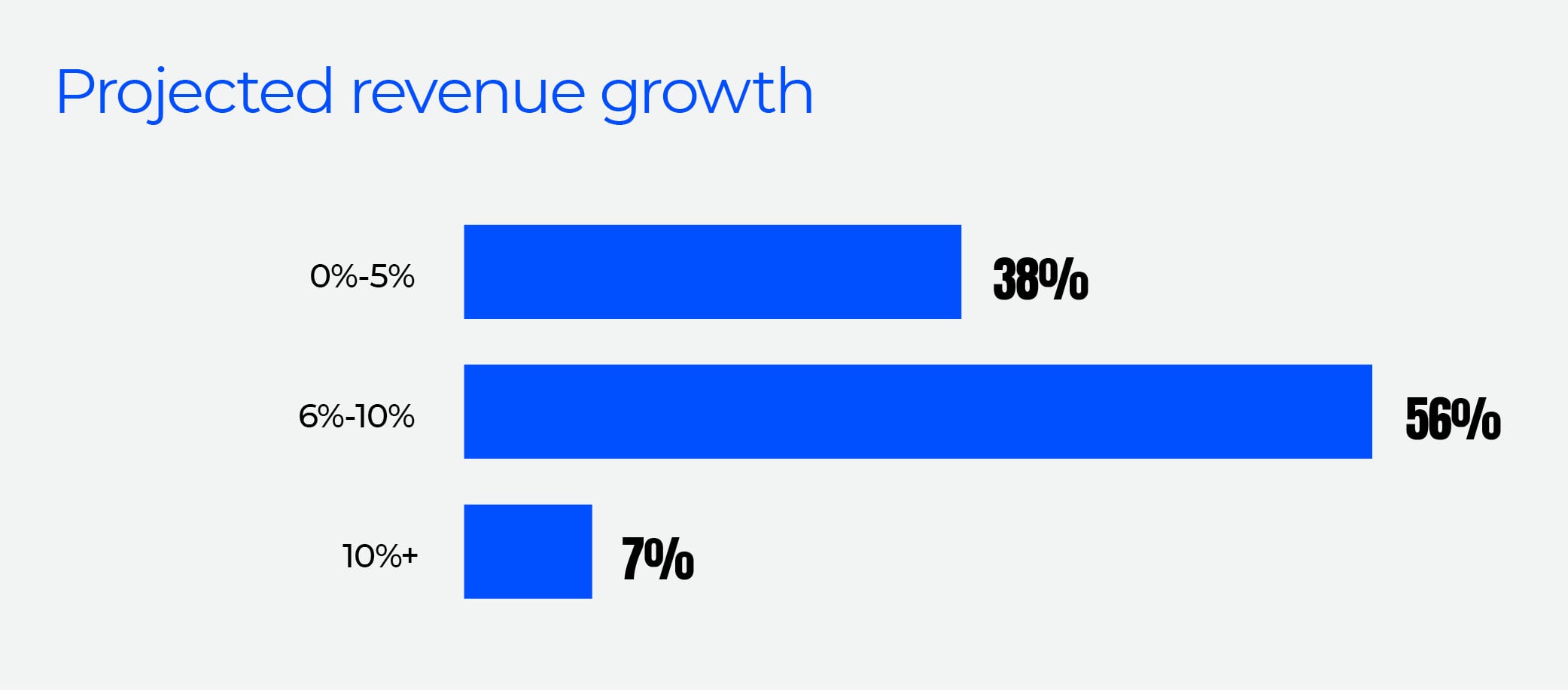
Exploring new revenue streams increased in strategic importance this year, climbing into the top three priorities. However, overall service expansion has slowed since 2025, with fewer institutions reporting net-new service rollouts.
Rather than funding capital-intensive product rollouts in a sticky-inflation, high-rate environment, leadership teams are prioritizing capital preservation and balance-sheet discipline, according to Wipfli Partner Robert Zondag. “Executives are focusing on extracting maximum value from existing account relationships and optimizing the tools they already have, rather than diluting margins across unproven channels.”
Talent-related pressures eased compared to last year. While 60% of executives reported talent gaps or shortages as a major barrier to strategic execution in the prior survey, that figure dropped to 42% in this study.
The drop in talent pressure doesn’t mean the war for talent is over, according to Zondag. Instead, it reflects a broader shift in workforce dynamics across the sector.
“We are in a ‘no hire, no fire’ environment,” Zondag explained. “Leadership teams are focusing on workforce optimization — holding headcount flat, stopping non-essential hiring and repurposing staff to meet new technology and operational needs.”
He said wage premiums for job-switching have leveled off outside specialized niches like data analytics and cybersecurity and employee churn has slowed. For leadership teams, the talent priority has shifted to upskilling existing staff to execute against digital and AI roadmaps.
This year’s top concern was a familiar one: Executives identified cybersecurity (including fraud) as their number-one concern for the fourth consecutive year.
Thirty-eight percent of executives reported an increase in cyberattacks on their institutions over the past year, while 46% reported an increase in fraud. A notable segment reported unchanged levels of attacks. However, Wipfli Director Carlos Vega noted that “no change” follows several years of sharp threat escalation.
“It’s more likely a signal of a permanent, heightened state of risk rather than a reprieve in bad-actor activity,” Vega said.
When it comes to technology deployment, including AI, many leaders are stuck in a circular dilemma: They’re hesitant to deploy advanced digital tools due to cybersecurity fears, yet they remain vulnerable because they lack modern infrastructure.
AI adoption is high among the executives we surveyed, with only 21% reporting no formal AI initiatives, paused rollouts or canceled projects. AI users report leaning on the technology most heavily for fraud detection and financial crime use cases, followed by customer service, back-office operations and risk analytics/regulatory compliance support.
AI outcomes have generally exceeded expectations
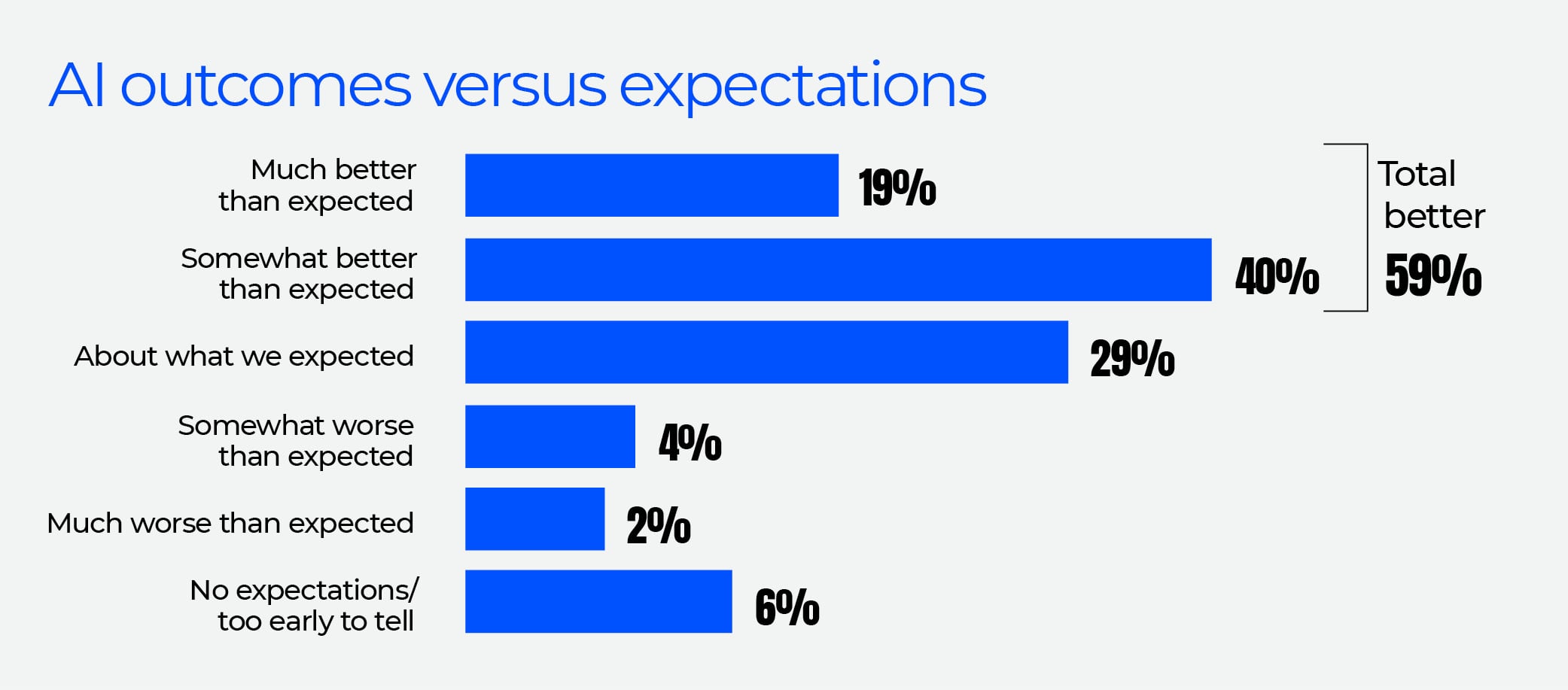
In our survey, 59% of executives report that AI outcomes have beat their expectations. The top areas where reality exceeded expectations were fraud prevention, operations and back-office productivity and financial or risk impacts.
Broader AI expansion remains constrained by several barriers, with cybersecurity threats and resilience concerns leading the list.
“Pursuing AI is a strategic choice, and it needs to match your institution’s risk tolerance,” said Anna Kooi, partner and financial services practice leader at Wipfli. “AI adoption may create some cyber exposure, but inaction creates competitive risk and ungoverned action creates operational exposure.”
Kooi recommends that leadership teams start their AI journey by establishing clear governance frameworks that allow them to innovate safely without compromising trust.
AI is not expected to impact headcount
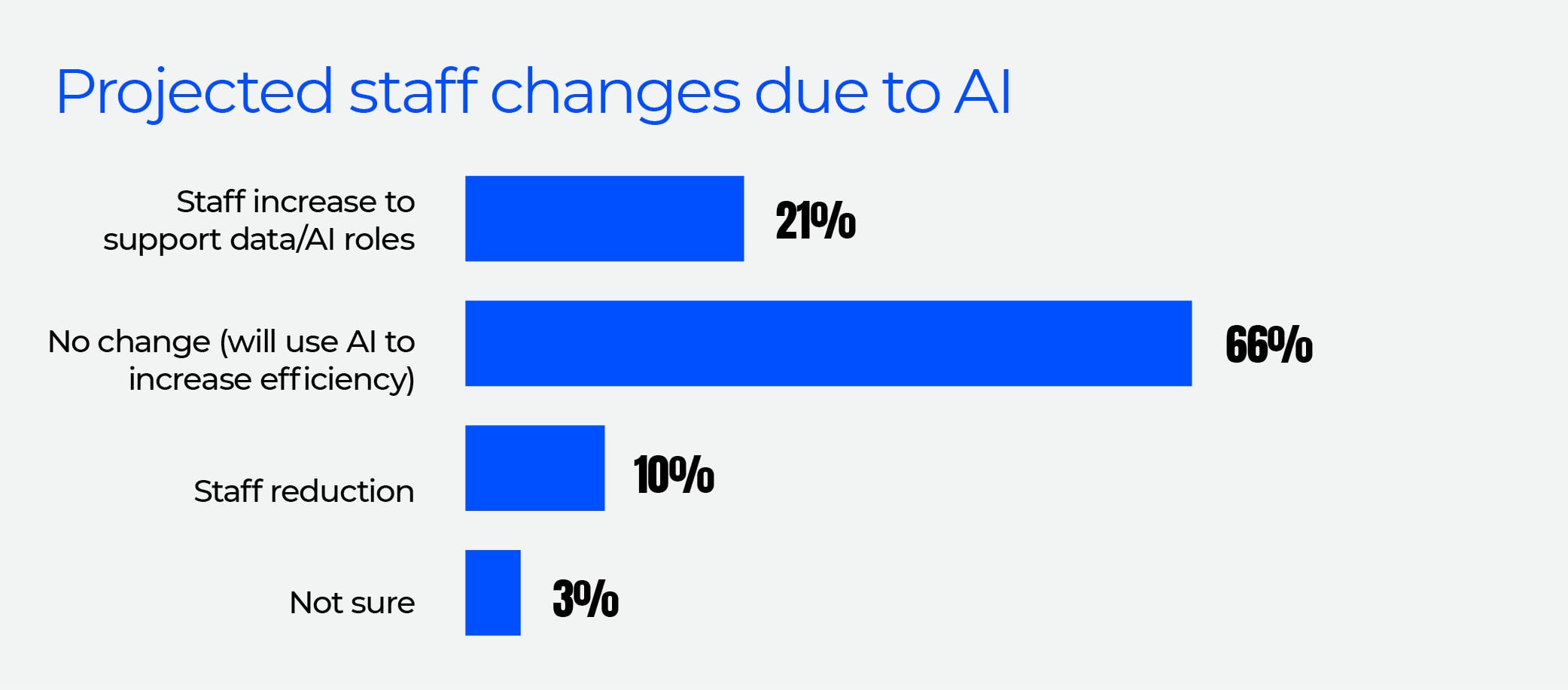
Two-thirds of executives whose institutions use AI expect no headcount change over the next 12 months, using the technology to boost productivity and efficiency instead. Only 10% expect a net reduction in staff, while 21% expect a net increase to support data and AI needs.
The full research report also details:
- Strategic priorities: Executives share their top growth strategies, digital initiatives and recently added services.
- Cyber responses: Learn how executives plan to respond to persistent fraud and cybersecurity threats.
- AI strategies: Executives using AI reveal their top use cases and plans for AI expansion.
The full report includes all the data, plus context from Wipfli. For media inquiries, contact Alicia O’Connell at alicia.oconnell@wipfli.com.