

0%
of executives plan to use AI to combat fraud.
0%
of executives say AI outcomes exceeded expectations.
0%
of executives rank cybersecurity as a top concern.
0%
of executives expect asset growth over the next year.
Wipfli conducted a national online survey of 101 credit union executives to uncover their business outlook, pain points and strategic priorities for the year ahead.
In this year’s survey, optimism has rebounded but remains uneven. While 69% of executives expect asset growth above 5% over the next 12 months, confidence skews with institution size. In credit unions with $1B or more in assets, 82% of executives project asset growth above 5%, compared to just 43% of those with less than $1B.
Asset growth projections
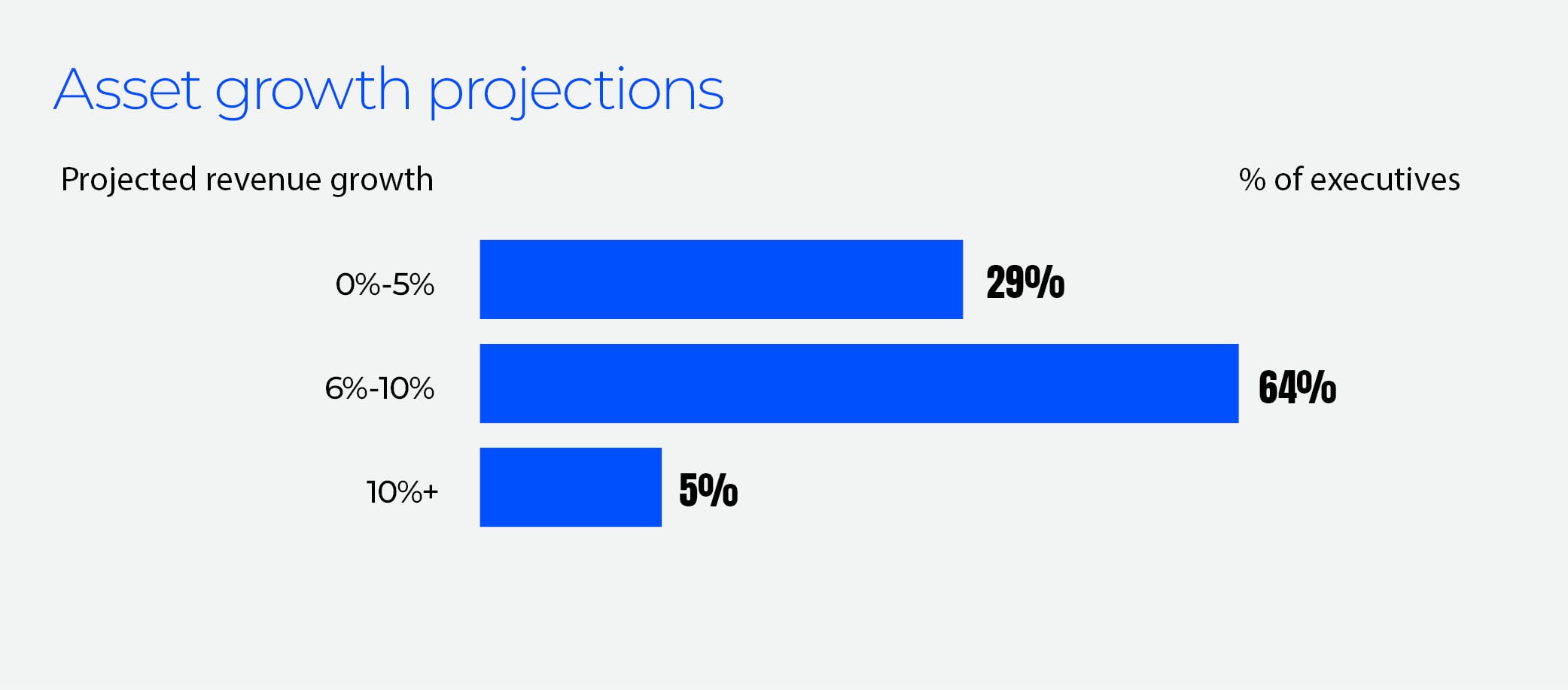
Among executives projecting growth, deposit acquisition is expected to be the primary driver — far outpacing loan growth and net interest margin optimization.
“For credit unions, deposit growth isn’t just an asset-liability management priority; it’s a non-negotiable condition for fulfilling their mission,” said Alison Herrick, partner at Wipfli.
To capture deposits in the current rate environment, Herrick cautions against competing solely on price. Competing strictly on interest rate attracts volatile, “hot-money” balances that leave as soon as a competitor offers a higher APY.
When asked to identify their most important strategies for the next 12 months, executives placed digital initiatives firmly at the top of their agendas. Improving digital member engagement and data analytics/AI emerged as the two leading priorities.
However, credit union leaders reported noticeably different strategic priorities based on asset size, with mid-sized and large institutions indicating much stronger interest in cloud adoption compared to those at small credit organizations. Over time, this divergence could create significant performance gaps.
“Cloud infrastructure is no longer just an IT upgrade; it is the prerequisite for most modern digital capabilities and AI deployment,” explained Carlos Vega, Wipfli director. “Credit unions relying on legacy, on-premise systems risk being locked out of real-time data analytics and advanced AI tools.”
This year’s top concern was a familiar one: executives identified cybersecurity (including fraud) as the top concern for the third consecutive year. It was the leading concern across every asset tier and the intensity of concern increased compared to the prior study.
More than half (52%) of executives reported an increase in cyberattacks on their institutions over the past year and 63% reported an increased level of fraud. Nearly three-quarters (73%) of credit union executives identified at least one unauthorized network or data access incident at their organization in the last 12 months, with 29% experiencing three or more incidents.
Heightened cyber risk has forced some leaders into a circular dilemma: They’re hesitant to deploy advanced digital tools due to cybersecurity fears, yet they remain vulnerable because they lack modern infrastructure. Getting out of this loop requires a mindset shift.
“Cybersecurity controls, monitoring and data governance aren’t just defensive line items,” explained Robert Zondag, Wipfli partner. “They are foundational infrastructure that grants an institution permission to innovate, expand digital access and scale safely.”
AI adoption is high among the executives we surveyed, with only 8% reporting no formal AI initiatives, paused rollouts or canceled projects. AI users report leaning on the technology most heavily for back-office operations, fraud detection and financial crime prevention and risk/compliance support.
AI outcomes have generally exceeded expectations
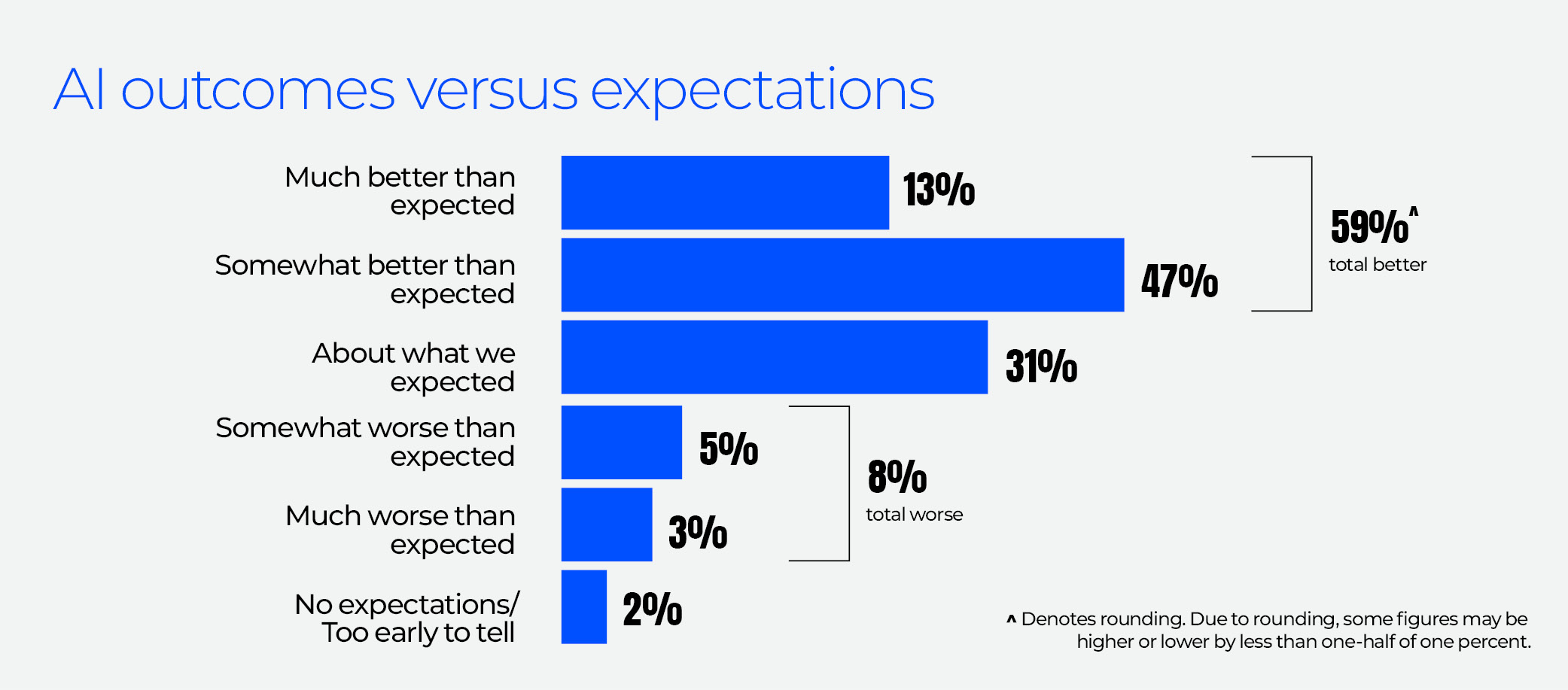
In our survey, 59% of executives report that AI outcomes have beat their expectations. However, broader AI expansion remains constrained by several barriers, with compliance and regulatory uncertainty leading the list.
“Pursuing AI is a strategic choice, and it needs to match your institution’s risk tolerance,” said Anna Kooi, partner and financial services practice leader at Wipfli. “AI adoption may create some cyber exposure, but inaction creates competitive risk and ungoverned action creates operational exposure.”
Kooi recommends that leadership teams start their AI journey by establishing clear governance frameworks that allow them to innovate safely without compromising trust.
AI is not expected to impact headcount
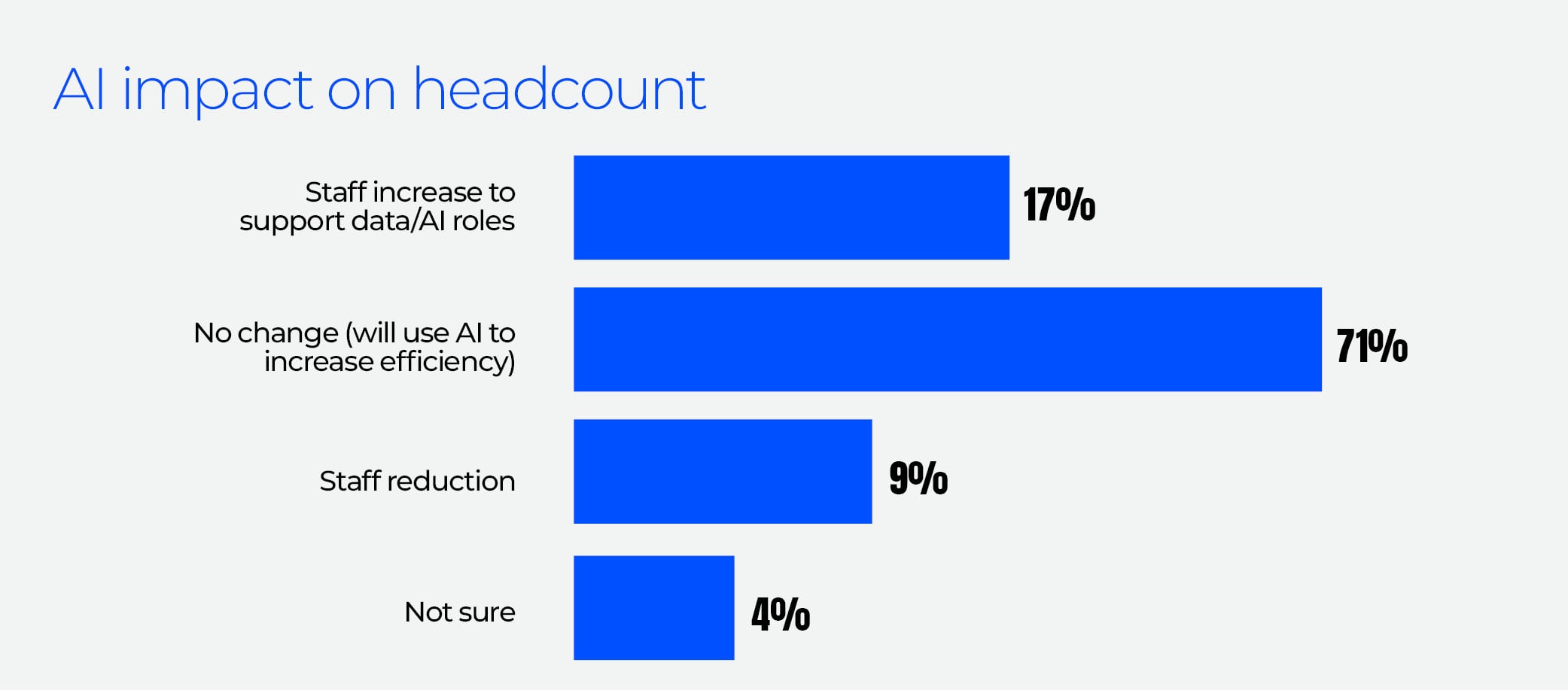
Seventy-one percent of executives whose institutions use AI expect no headcount change over the next 12 months, using the technology to boost productivity and efficiency instead. Only 9% expect a net reduction in staff, while 17% expect a net increase to support data and AI needs.
The full report also details:
- Strategic priorities: Executives share their top growth strategies, digital initiatives and recently added services.
- Cyber responses: Learn how executives plan to respond to persistent fraud and cybersecurity threats.
- AI strategies: Executives using AI reveal their top use cases and plans for AI expansion.
The full report includes all the data, plus context from Wipfli. For media inquiries, contact Alicia O’Connell at alicia.oconnell@wipfli.com.