
How we help you
Get help integrating Salesforce Manufacturing Cloud into your business. This CRM includes all the benefits of the standard version — to drive more effective sales, marketing and customer retention — plus extended features built specifically for manufacturing operations.
Get a CRM preconfigured for manufacturers
Share data with other core systems to create visibility
Get predictive recommendations to strengthen customer relationships
Understand what’s happening and where your business is going
Get support driving growth, retention and customer satisfaction
We know manufacturing as deeply as we understand CRMs. So we don’t just sell you Salesforce Cloud Manufacturing — we help you integrate it into your daily operations to generate stronger growth, retention and customer satisfaction.
Innovation and recognition
Wipfli’s digital specialists go beyond implementing commercial software. We are committed to fostering active relationships within our technology ecosystem, investing in joint innovation and continually earning certifications that help expand what’s possible for clients. Wipfli is proud to have a track record of experience that includes the following:
500+
Salesforce projects
280+
Salesforce certifications achieved
86%
of clients convert to long-term managed services
Insights and resources

ARTICLE
Manufacturing risk management: Key threats and action steps
The manufacturing industry is in the midst of a volatile period. Manufacturers must overcome risks like tariffs, supply chain disruptions, international macroeconomic pressures from the wars in Iran and Ukraine, AI growing pains and more — all while protecting profitability. Implementing an effective risk management strategy can help your manufacturing business navigate today’s risks. Keep reading to learn more, plus how to assess and mitigate your own top risks. Why risk management matters for manufacturers Manufacturing businesses are currently operating in a high-VUCA environment. The acronym, which stands for volatility, uncertainty, complexity and ambiguity, describes many of the key pressures manufacturing CFOs and COOs face as they try to maintain smooth operations and combat shrinking margins. Risk management is a way to bring a little stability to that high-VUCA environment. There’s so much you can’t control — tariffs, international trade, wars, government policies — but by focusing on what you can do within your own four walls, you can still manage your risks enough to protect your value and operating income. This often starts with a mindset shift. If you’re willing to let go of your old ways of doing business and embrace changes like new technology or revamped processes, you’ll have taken a big first step towards making your business stronger and more adaptable. What are the major risks facing manufacturers? Manufacturers today face risks like supply chain concentration, workforce shortages and cybersecurity threats. Those risks are compounded by big-picture, geopolitical issues like tariffs and international conflicts, as well as the ongoing rise of AI. Top risks for manufacturers include: Tariff risks: Most U.S. imports are now tariffed at between 10-50% , raising materials costs for many manufacturers while also putting additional cost pressures on consumers. Geopolitical risks: The wars in Iran and Ukraine have strained supply chains and caused price spikes for oil and other essential commodities. Workforce risks: Manufacturing’s perennial labor problem hasn’t gotten any easier, with both worker shortages and high labor costs continuing to pressure businesses. Supply chain risks: Many manufacturers still put too many eggs in one basket, relying on overly concentrated supply chains with respect to both vendors and customers. AI risks: While AI can deliver significant benefits to manufacturers , the technology comes with major risks too , especially in areas like data privacy and shadow AI . Cybersecurity risks: Cybersecurity has increasingly gone from just an IT concern to a significant financial risk , as ransomware attacks or data breaches can lead to financial, operational and reputational harm. Shrinking margins: Rising costs on many fronts are cutting into margins, making it harder for manufacturers to get or stay profitable. Production risks: Depending on industry or process type, manufacturers also face production-specific risks around issues like safety and wasted open capacity. How to assess manufacturing risk Your manufacturing business may deal with many of the industrywide risks covered in this article, but it could also face others more specific to your region or niche within the industry. Conducting a manufacturing risk assessment can help you understand your unique risk environment and develop a strategy to mitigate it. Here’s a practical risk assessment framework for manufacturers (a risk advisory firm can help you work through it): 1. Identify and document risks Identify the risk areas and individual risks that could affect your business. This will likely include industrywide risks like tariffs or cybersecurity. Also consider factors more specific to your business, like a mission-critical employee who’s due to retire or production risks like food or chemical safety. 2. Assess the likelihood and impact of each risk Once you have a list of risks, assess each risk based on likelihood and impact. You can rate each of these factors using a scale of low, medium or high. 3. Prioritize risk based on likelihood and impact Prioritize your risks based on likelihood and impact, as well as your essential business objectives. For example, if supply chain disruptions are both high-likelihood and high-impact, that’s a risk you’ll want to tackle right away, while a low-likelihood, medium-impact risk will likely be much lower on your priorities list. Your C-suite should also discuss risk tolerance. 4. Identify existing controls and gaps Assess the controls, policies and procedures you already have in place to mitigate your high-priority risks. This will also help you identify control gaps that need to be filled, like a lack of AI governance or an ineffective system for tracking tariff costs. 5. Develop risk mitigation strategies Develop a risk management roadmap to tackle your top priority risks. This will typically include establishing new controls or policies to manage risk, as well as training, scenario planning and strategic steps like technology upgrades or inventory management changes. 6. Assign risk owners and accountability To ensure your risk management roadmap actually gets implemented, assign owners to each action step. Creating a system of accountability, like regular reporting at the C-suite or board level, can also help drive follow-through. 7. Monitor and assess risk regularly As you implement your risk management roadmap, continue to regularly monitor your risk environment and periodically reassess. Risks are constantly evolving, so your risk management strategy needs to be, too. How can manufacturers mitigate business risks? Implementing a risk management strategy can help manufacturing CFOs and COOs mitigate their top business risks. Depending on the results of your risk assessment, you may wish to consider strategies like: Work with a risk management advisor An advisory firm that works with manufacturers to manage risk and improve performance can help your business navigate today’s high-VUCA environment. Look to an advisor to conduct your risk assessment and help you implement internal controls, operational changes and strategic shifts to manage your risks. Strengthen supply chain resilience Diversify your supply chain to mitigate tariff and disruption risks. Start by mapping your supply chain and identifying possible alternatives for both sourcing and customers. You may also want to do a reshoring or nearshoring evaluation to determine if either could make sense for your business. Improve operational processes and controls Running your business more efficiently can help protect your margins from surging costs . One idea: Implement production monitoring to get a clearer sense of how your production is performing on a day-to-day basis (you’ll get a dashboard showing red or green status for your machines) so you can establish a baseline to improve on. You can also use AI to make predictive maintenance recommendations to reduce your risk of machine downtime. Strengthen your analytics The more data you have, the better you understand how your business is performing. This applies to not just production line performance but also areas like costs, pricing, inventory and organizational performance — all of which can help you identify inefficiencies and understand how what happens in your plant impacts profitability. Implement strong cybersecurity and AI controls You need effective controls for cybersecurity , data protection and AI. This typically includes establishing technology governance , implementing ongoing cybersecurity training and taking steps to make your business more cyber resilient . Improve financial forecasting and scenario planning CFOs should take advantage of AI’s analytical capabilities to do extensive financial forecasting and evaluate the impact of various scenarios. Forecasting and scenario planning can help you to both understand potential risk areas and decide which to prioritize in your risk roadmap. Regularly reassess risks and update controls and strategies Don’t assume today’s risks are the same as tomorrows. Make risk management an ongoing, living practice that includes periodic reassessments and updates to your controls and strategies. Stop putting off succession planning Succession planning isn’t just about who will own the company 10 years from now. Engaging in a thoughtful succession planning process makes your whole business more stable by ensuring continuity of knowledge after a long-time employee retires, passing sales relationships from one generation to the next and giving employees a path to move up in the business. Don’t ignore valuable tax opportunities Manufacturers can often offset margin pressures using tax incentives. Depending on the circumstances, these may include R&D tax credits , bonus depreciation or qualified production property , state-level incentives and even sunsetting energy efficiency deductions like 179D that could still apply to plant upgrades you’ve already made. Read More Can the qualified production property rule help your manufacturing firm reduce tax payments? Cybersecurity in manufacturing: Strategies to mitigate risk Manufacturing trends: What 456 leaders say about the industry today.
ARTICLE
Pros and cons of robotics in manufacturing
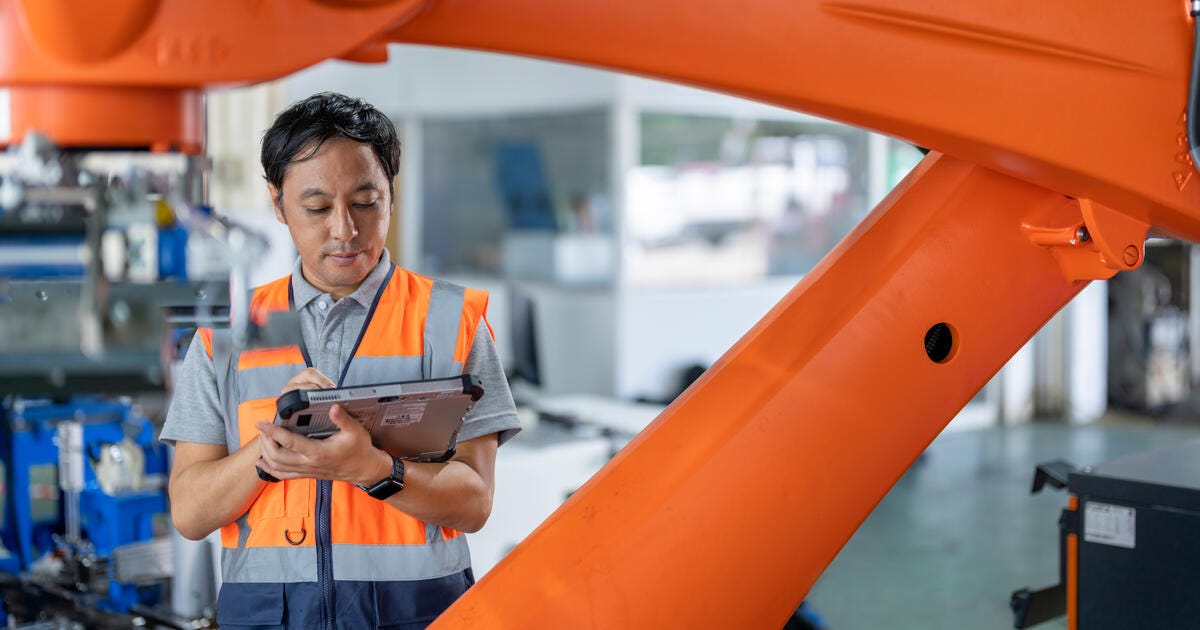
Today’s industrial robots operate across a wide range of industries, from semiconductors and automobiles to plastics processing and metal forging. Pretty much any repetitive operation is a great job for a robot, particularly if it’s dangerous or difficult for people. Manufacturing robots have been used for high-volume processes, but as the technology advances and the cost of industrial robots declines, more options and opportunities are opening for medium- and small-sized operations to leverage robot manufacturing. These robots also help manufacturers address tight labor pools, global market competitiveness and safety. If you’re curious whether robots can enhance your value stream, here are the main pros and cons to consider when it comes to industrial automation and robotics: What are industrial robots? Industrial robots are programmable machines designed to perform manufacturing tasks with precision, speed and repeatability, typically without direct human intervention. Industrial robots are highly flexible and can be reprogrammed to handle a range of tasks across different production lines. They integrate with broader manufacturing systems, including industrial internet of things (IIoT) platforms, vision systems and ERP software, to support data-driven operations. For manufacturers, they represent a practical path to improving throughput, quality and workforce safety across the value stream. According to the International Federation of Robotics, the global stock of operational industrial robots reached a record 3.9 million units in 2022 . That figure continues to grow as manufacturers of all sizes look to automation to sustain throughput and reduce dependence on constrained labor markets. Advantages of industrial robots Here are some of the advantages manufacturers often experience when they add industrial robots to their production floor: 1. Better quality control and consistency Along with other tech — such as the IIoT, artificial intelligence, data analytics or 3D printing robots — industrial robots are able to provide better production quality and more precise and reliable processes. Added benefits also include reduced cycle times and real-time monitoring to improve preventive maintenance practices. 2. Maximum productivity and throughput An industrial robot increases speed for manufacturing processes, in part by operating 24/7. Robots don’t need breaks or shift changes. The speed and dependability of robots ultimately reduce cycle time and maximize throughput. Robotic factory automation and manufacturing with robotics enables high efficiency. 3. Greater safety Using robots for repetitive tasks reduces the risk of injury for workers, especially when manufacturing must take place under hostile conditions. In addition, supervisors can oversee the process online or via remote monitoring. 4. Reduced direct labor costs The cost of having a person handle many manufacturing operations is often more expensive than a robot. This can also free up workers so their skills and knowledge can be used in other business areas, such as engineering, programming and maintenance of the robotics used in manufacturing. 5. Keeping manufacturing in the U.S. Some argue that robots are taking jobs away from U.S. workers, but that’s not necessarily the case. Industrial robots are typically integrated into a series of operations that require human expertise. For example, you could have a robot welding parts that are handed off to a person to perform a task that requires a human’s intuitive “if, then” thinking. The future of robotics in manufacturing involves humans and robots working together in factories. Disadvantages of industrial robots Industrial robots are not without tradeoffs. Before moving forward with automation, it’s important to plan accordingly for these potential challenges: 1. High initial investment Robots typically require a large upfront investment. As you research your business case for purchasing, consider all the costs of industrial robots, including installation and configuration. You should also evaluate whether your robot can be easily modified if you need to alter its operation in the future. Robotics for manufacturing is a significant investment. 2. Expertise can be scarce Industrial robots need sophisticated operation, maintenance and programming from controls engineers. While the number of people with these skills is growing, it’s currently limited. As a result, it’s important to consider the personnel investment you’ll need to make to bring in that expertise or “retool” your existing staff to take on the task of working with robots in industrial automation. 3. Ongoing costs While industrial robots may reduce some manufacturing labor costs, they do come with their own ongoing expenses, such as maintenance. In addition, you’ll want to consider the costs to keep your robot and any related IIoT-connected devices protected from cyberthreats. Industrial robots vs collaborative robots Industrial robots and collaborative robots (aka cobots) serve different purposes on the manufacturing floor, and understanding the distinction is critical before making an investment decision. Traditional industrial robots are built for speed, precision and high payload. They typically operate behind safety barriers or in fully fenced cells, isolated from human workers during operation. This makes them well-suited for high-volume, high-speed applications such as welding, stamping, or painting, and for environments where throughput is the priority and task variation is low. The tradeoff is complexity. Programming, integration and safety infrastructure require significant upfront planning and controls engineering support. On the other hand, collaborative robots are designed to work alongside people in shared spaces without physical barriers. They use sensors and force-limiting technology to detect and respond to human presence, making them a practical option for operations that require frequent task changes, limited floor space or tighter labor integration. Cobots generally carry lower payloads and operate at slower speeds than traditional industrial robots, but they can be deployed and reprogrammed more quickly, which is advantageous for mid-size manufacturers managing product variety or shorter production runs. Manufacturers need to match the right technology to the right application. A single facility might use traditional robots for high-speed assembly and cobots for inspection, packaging or tasks that benefit from human-robot collaboration. Evaluating your production environment, workforce structure and growth trajectory is the starting point for making that determination. Feature Industrial robots Collaborative robots (cobots) Operating environment Isolated, behind safety barriers Shared space with human workers Speed High Moderate Payload capacity High (up to several hundred kg) Lower (typically under 35 kg) Programming complexity Higher — requires controls engineering Lower — often teach-pendant or app-based Upfront cost Higher Lower Deployment time Longer Faster Best for High-volume, repetitive, high-speed tasks Flexible, variable or human-adjacent tasks Safety infrastructure Required (caging, fencing) Built-in sensors; no caging required Reprogramming flexibility Moderate High Ideal operation size Large-scale production lines Small to mid-size operations or flexible lines Read more Best practices for inventory optimization in manufacturing and distribution Improving profitability and margins in manufacturing 9 tariff mitigation strategies for U.S. manufacturers
ARTICLE
The value of inventory optimization in manufacturing
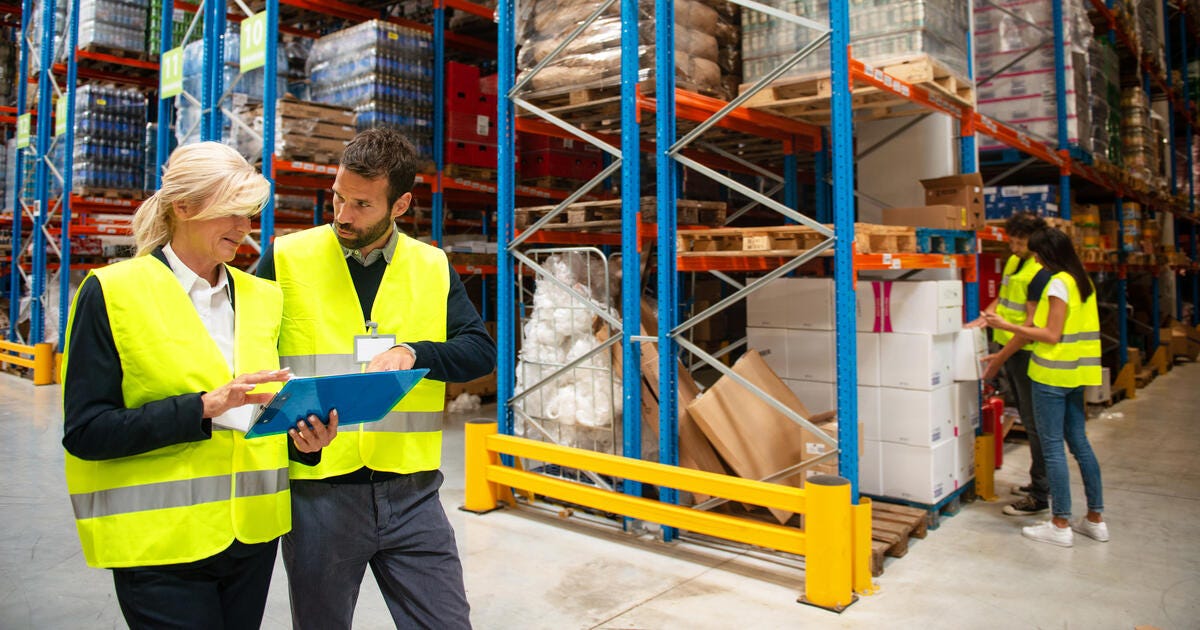
The business landscape for manufacturers and distributors has changed dramatically over the last few years. Supply chain challenges stemming from tariffs, geopolitical instability and other issues have made inventory management more difficult. Difficulty obtaining materials and other inputs can diminish your ability to deliver products, which leads to issues with working capital. Manufacturers may need to consider internal changes to free up capital, including inventory optimization. Keep reading to learn the specifics about inventory optimization and how it can have a meaningful impact on working capital. What is inventory optimization? Inventory optimization is the process of determining and maintaining the right quantity, mix and location of inventory to meet customer demand while minimizing costs and maximizing operational efficiency. For manufacturers and distributors, this means balancing two competing risks: Carrying too much inventory, which ties up working capital and drives up carrying costs Carrying too little, which leads to stockouts, production delays and missed customer orders The core objectives of inventory optimization in manufacturing and distribution include: Reducing excess and obsolete stock Improving demand forecasting accuracy Aligning replenishment cycles with actual consumption patterns Building supply chain resilience without overstocking When these objectives are met together, businesses gain a sharper view of their cash position, more predictable operations and the ability to respond to market shifts without relying on emergency financing to cover preventable gaps. What are the benefits of inventory optimization in manufacturing? A well-executed inventory optimization plan delivers measurable financial and operational improvements across the business. Key benefits include: Improved cash flow and working capital: Reducing excess inventory releases cash that can be reinvested in growth, operations or debt reduction rather than sitting dormant on a shelf. Lower carrying costs: Less inventory on hand means reduced expenses related to storage, insurance, handling and depreciation. Fewer stockouts and production disruptions: Better demand visibility helps ensure the right materials are available when needed, reducing costly production delays and unplanned purchasing. Stronger supplier relationships: Sharing demand data with suppliers supports more predictable lead times and creates leverage for better pricing and priority fulfillment. Reduced obsolescence and write-offs: Tighter inventory controls reduce the risk of holding items that can no longer be sold or used, protecting margin and financial reporting integrity. Better customer fulfillment: Optimized stock levels improve fill rates and on-time delivery, which both directly affect customer satisfaction and long-term retention. Cleaner financial reporting: Accurate, real-time inventory data improves the reliability of financial statements and simplifies audit and lender reporting. The importance of working capital management Not all businesses are experiencing working capital gaps. According to the Working Capital Management Report issued by the National Center for the Middle Market , 59% of participants do not at all experience issues with working capital and only 36% have issues more than twice per year. For those facing regular issues, the challenge is typically solved by tapping lines of credit or taking additional business loans. Businesses need to carefully review practices, including inventory management, to identify opportunities for optimization. Even relatively minor adjustments to inventory can result in significant payoffs. Here’s an example: Consider a mid-market manufacturer of consumer goods that was growing rapidly but struggling to consistently fulfill orders. The company relied on disparate modules, which required duplicate data entry and management. This created slow and error-prone processes and made it difficult to track and understand inventory levels. As a result, the business couldn’t determine which inventory was contributing to margin and which was quietly eroding it. Leadership was leaning on a line of credit to cover cash shortfalls that better data could have prevented. After implementing an integrated ERP solution and redesigning its inventory tracking processes, the company increased warehouse efficiency and filled significantly more orders than the previous year. Cash that had been locked up in excess and misallocated stock was freed up, reducing the need for short-term borrowing and improving financial visibility across the organization. This pattern is not unique. Distributors face similar pressure. Common distribution pain points include inventory spread across channels with limited visibility and accuracy, and fulfillment speed at risk due to labor shortages and process inefficiencies. These conditions force reactive purchasing decisions, inflate safety stock levels and create carrying costs that compound over time. Inventory management best practices for manufacturers Several optimization steps can be followed to improve inventory management. The best practices outlined below apply to businesses across multiple industries. Establish inventory KPIs These key performance indicators (KPIs) help a business measure performance toward inventory management goals. They are especially useful tools for businesses seeking to improve in one or more areas. Common inventory KPIs include inventory carrying costs, inventory write-offs or write-downs, rate of inventory turnover, cycle time and fill rate. By regularly evaluating processes in these areas, it becomes easy to identify trouble areas where changes are needed. Reduce inventory Most businesses have between 25% to 30% of working capital tied up in inventory. For this reason, it is important to find the point where the lowest amount of inventory can be maintained without being understocked. Common inventory reduction methods include: Lowering lead times: This can be accomplished by tracking existing lead times, sharing sales data with suppliers and reducing minimum order quantities. Liquidating obsolete inventory: This can be accomplished by offering customers discounts or positioning it as a tax write-off. Improving inventory forecasting: By implementing real-time tracking and reporting, integrated communication and large-volume inventory management tools, businesses can make more reliable forecasts. Optimize inventory turnover Inventory turnover refers to the number of times inventory is sold or used in a given period. This will help management understand the market demand for products and the amount of old or obsolete inventory being carried. Common ways to increase inventory turnover include testing new pricing strategies, getting rid of old inventory, improving demand forecasting and streamlining the supply chain to reduce delivery costs and in-transit times. Carry safety inventory This is a small amount of select inventory designed to protect from sudden spikes in market demand and lead times. Without this reserve inventory, a business could be exposed to a loss of revenue, customers and market share if unable to fulfill orders. When properly used, it manages against risks of unexpected demand and acts as a buffer for longer-than-expected lead times. Read more 2026 distribution industry outlook: To overcome pricing pressures and uncertainty, go digital Cybersecurity in manufacturing: Risks and best practices Managing margin pressure in manufacturing through pricing strategy and cost visibility
Reach out to our team
Our manufacturing technology advisors are ready to help you implement a Salesforce CRM, AI and other modern systems to drive growth and stronger customer relationships. Let's talk about your top challenges and how a targeted tech strategy can help solve them.

LET'S CONNECT
Discover how Wipfli can help you overcome barriers to profitability and build smarter, leaner operations.